NEED HELP FAST? We have over 40 years' experience with Bulk Material Handling, Packaging, and Processing. (979) 217-1480 GET A QUOTE
NEED HELP FAST? (979) 217-1480 GET A QUOTE

How to Choose Bag Filling Equipment for Your Business?
Choosing bag filling equipment is a production decision, not just a purchase. The right system must suit your product, bag format, output target, and available floor space. PMMI’s 2024 State of the Industry report examines packaging machinery demand alongside pressures such as labor availability, operating costs, and automation investment. These pressures matter on the plant floor. A filler that runs quickly in a brochure may struggle with dusty powder, uneven granules, or fragile pieces. Small details matter.
Start by defining the real job. Record the product’s flow behavior, bag weight, required accuracy, changeover frequency, and expected shifts per day. Then compare auger, net-weigh, volumetric, and other filling methods against those needs. Ask suppliers for product trials using your material and actual bags. Check fill-weight results, changeover time, cleaning access, and how the equipment connects to conveyors or sealers. A short demonstration is useful; a documented test is better. Also review spare-parts access, operator training, and service response times. These details can shape lifetime costs more than the purchase price alone. There is no universal best machine. Even a careful selection can miss something; production conditions change, and estimates are imperfect. Use measured trial results, clear acceptance criteria, and input from operators before committing. This guide explains how to compare options and choose bag filling equipment that fits your business today, with room for realistic growth.
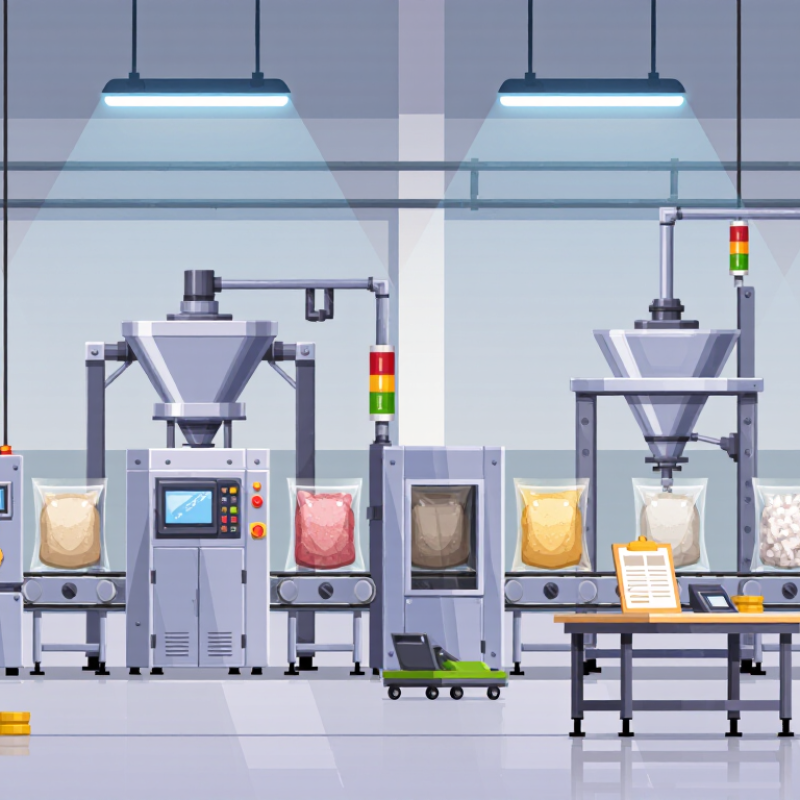
Identify Product and Bag Format: 5–50 kg Sacks or Typical 500–2,000 kg FIBCs
Start with the product, not the machine. Free-flowing pellets, dusty flour, and fragile flakes behave differently at the filling spout. EUROSAC’s industry overview places industrial paper sacks in the 5–50 kg range, while FIBCA guidance identifies 500–2,000 kg as a typical FIBC capacity. That is a major change in scale. A 25 kg sack may suit palletized deliveries; a 1,000 kg FIBC may reduce handling when customers unload with lifting equipment.
For sacks, check whether the product bridges, aerates, or creates dust. These traits affect feeder choice, extraction, and how consistently each bag reaches its target weight. For FIBCs, confirm filling-spout dimensions, liner needs, and lifting-loop access before selecting the frame. A neat capacity figure can mislead. Bulk density varies, and a bag that holds the stated weight on paper may not fit the product’s volume. Test with the actual material, then compare weighing accuracy, changeover time, and operator access. Small details matter: a dusty valve or awkward spout can slow a whole shift. Industry guidance narrows the choice; a production trial should settle it.
How to Choose Bag Filling Equipment for Your Business? — Identify Product and Bag Format: 5–50 kg Sacks or Typical 500–2,000 kg FIBCs
| Selection Factor | 5–50 kg Sacks | 500–2,000 kg FIBCs | What to Check Before Choosing |
|---|---|---|---|
| Typical bag format | Paper, woven polypropylene, or plastic sacks; bags may have open mouths or preformed valves. | Flexible intermediate bulk containers (FIBCs), commonly called big bags or bulk bags, with lifting loops and a filling spout or open top. | Confirm bag material, dimensions, mouth or spout design, liner requirements, and whether bags are supplied flat, preformed, or on a roll. |
| Suitable filling system | Net-weigh or gross-weigh sack fillers. Open-mouth systems handle open sacks; valve bag fillers fill through a valve sleeve. | FIBC filling stations support the bag from its lifting loops and fill through the top opening or filling spout. Filling can be weight-controlled. | Match the filler to the bag opening and the required weighing method. A sack filler and an FIBC station are generally designed for different bag formats. |
| Product flow characteristics | Free-flowing granules and powders can often be fed by gravity or a controlled feeder. Cohesive or aerated powders may need a suitable screw or other controlled feed system. | Large fills require controlled product flow; fluidizable powders may need aeration or deaeration provisions, while coarse products may use gravity or mechanical feeding. | Assess particle size, bulk density, flowability, dustiness, and tendency to bridge, segregate, or compact. Test the actual product where possible. |
| Weighing and accuracy | Integrated scales can weigh each sack. Net weighing fills a separate weigh hopper before discharge; gross weighing fills the bag while it is on the scale. | Load cells or a platform scale can measure the filled FIBC. The weighing arrangement must account for the suspended or supported bag and filling frame. | Specify target weight, acceptable tolerance, calibration procedure, and how the system handles material in flight after the feed stops. |
| Bag support and handling | Operators or bag-handling equipment position sacks. A bag clamp, spout, support platform, or takeaway conveyor may be used depending on the line. | A dedicated frame supports the filled weight through the FIBC loops or another approved support arrangement. A pallet or conveyor may be included for removal. | Check safe working loads, lifting points, operator access, bag changeover method, and how filled bags will be moved and stored. |
| Closure and discharge | Open-mouth sacks may be sewn, heat-sealed, or otherwise closed depending on bag material. Valve bags typically retain product through their valve design; closure needs vary by application. | FIBCs may use a filling spout closure, a top skirt, or another design specified for the bag. Bottom discharge spouts are used when controlled emptying is required. | Confirm closure requirements with the bag supplier and consider whether the filled package must resist moisture, leakage, or product loss during handling. |
| Dust control | A close-fitting filling spout and local dust extraction can help control dust, particularly with fine powders and open-mouth sacks. | A spout connection and suitable extraction point can reduce dust around the filling interface. The required arrangement depends on the product and bag design. | Identify dust emission points and review extraction needs, product exposure limits, and any combustible-dust hazards with qualified safety personnel. |
| Line integration | Common additions include bag conveyors, check weighing, metal detection where appropriate, and bag closing equipment. | Common additions include bag placement aids, pallet handling, stretch wrapping, and connections to upstream silos or bulk conveying systems. | Map the full process from product supply through filled-bag removal. Check available floor space, utilities, controls, and required guarding. |
| Best-fit operating need | Often appropriate when products are packed, shipped, or handled as individual sacks in the 5–50 kg range. | Often appropriate when larger unit loads are preferred to reduce the number of packages handled and the downstream process can accept FIBCs. | Choose the format based on customer requirements, transport and storage equipment, handling practices, and the product’s filling and discharge behavior. |
Related Posts
-

Exploring the Best Bag Filling Equipment of 2026 for Efficient Operations?
-

2026 Top Automated Packaging Equipment Innovations and Trends
-

Top 10 Packaging Automation Equipment Solutions You Need to Know?
-
Revolutionize Your Packaging Process with Innovative Bag Filling Equipment Solutions
-
What is a Bag Filling Machine and How Does It Work?
-
Top Packaging Automation Equipment for Efficient Production?