NEED HELP FAST? We have over 40 years' experience with Bulk Material Handling, Packaging, and Processing. (979) 217-1480 GET A QUOTE
NEED HELP FAST? (979) 217-1480 GET A QUOTE

Choosing the right China-based supplier can shape the cost, safety, and reliability of every shipment. For global buyers, bulk packaging is not simply a purchasing category. It involves material performance, production control, export documentation, and consistent delivery.
This guide examines manufacturers that serve industrial, food, agricultural, chemical, and retail supply chains. It focuses on practical details, including woven polypropylene strength, liner construction, stitching quality, moisture protection, and pallet handling. A factory visit may reveal automated cutting lines, sample rooms, and packed goods waiting for inspection. These details often say more than a polished website. Still, photographs can mislead.
Reliable evaluation requires more than comparing quotations. Buyers should request material specifications, test reports, production samples, and clear quality agreements. They should also confirm applicable food-contact, transport, labeling, environmental, and import requirements for each destination market. Certifications can support trust, but they do not replace independent verification. No supplier is perfect. Even experienced manufacturers may face delays, material variation, or communication gaps.
The manufacturers discussed in this overview are considered through an evidence-based sourcing lens. Their capabilities, customization options, quality systems, production scale, and overseas service experience all matter. So does their willingness to explain limitations. A dependable partner answers difficult questions before the purchase order is signed. That habit can prevent damaged bags, rejected cargo, and expensive rework. Global buyers should treat this guide as a starting point, then conduct audits and technical checks suited to their products. Practical judgment remains essential.
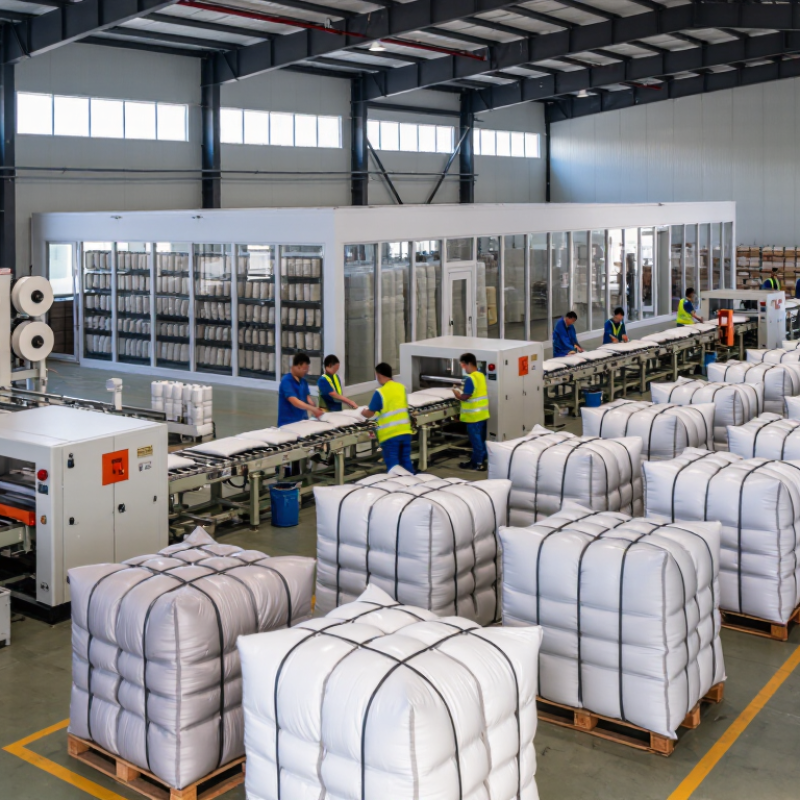
Bulk packaging is designed to move large quantities of goods safely and efficiently. It includes woven sacks, flexible intermediate bulk containers, drums, pallets, and heavy-duty cartons. These formats protect materials during storage, handling, and international transport. A 1,000-kilogram container may hold resin, grain, minerals, or approved industrial materials. Its fabric strength, liner quality, stitching, and lifting loops all affect performance.
China serves global buyers through dense manufacturing networks and mature export infrastructure. Raw material suppliers, packaging converters, printing facilities, testing laboratories, and ports often operate within connected regions. This structure supports custom dimensions, stronger fabrics, moisture barriers, and smaller trial orders. Experienced buyers should request material specifications, load-testing reports, production samples, and clear traceability records. Factory inspections can also reveal stitching defects that photographs may hide.
Price is not the whole decision. A cheaper bag can create product loss, damaged pallets, or delayed unloading. A factory may pass a sample inspection but struggle with consistency at scale. That risk deserves attention. Buyers should confirm quality tolerances, packing methods, container loading plans, and replacement procedures before production. China’s advantage is practical flexibility, but reliable results still depend on careful communication and independent checks. Small details matter.
China’s bulk packaging industry serves chemicals, minerals, food ingredients, agriculture, and construction materials. Key products include flexible intermediate bulk containers (FIBCs), woven polypropylene sacks, paper bulk bags, steel drums, plastic drums, and intermediate bulk containers (IBCs). FIBCs usually carry 500–2,000 kilograms, with coated fabric helping resist moisture. Woven sacks suit granular products and high-volume export handling. Paper bulk bags offer better printability, but they need dry storage.
The global FIBC market was valued at about US$5.2 billion in 2023, according to Grand View Research, with demand expected to grow steadily through 2030. Smithers also identifies lightweight, recyclable, and high-barrier packaging as major market directions. Chinese manufacturers increasingly produce four-panel bags, circular bags, conductive designs, ventilated sacks, and UN-certified containers for regulated transport. However, certification alone does not guarantee performance. Stitch quality, fabric strength, liner fit, and pallet stability still require inspection.
Tips: Match the container to product density, filling method, discharge design, and storage climate. Request test reports for tensile strength, seam performance, and drop resistance. For food-contact packaging, verify migration documents and traceability. A factory sample may look excellent, yet production consistency can differ. Check several batches, not only one. Also review recycled-content claims carefully, because sustainability data is sometimes incomplete.
When evaluating Chinese bulk packaging manufacturers, start with evidence, not polished photographs. Request the factory address, production flow, equipment ownership, and recent audit records. Verify whether the supplier converts film, weaves sacks, prints, or outsources these steps. Each answer affects lead time and accountability.
Ask for evidence. A capable manufacturer should provide material traceability, batch coding, calibration logs, and test results for tensile strength, seam strength, and moisture resistance. Independent laboratory reports are stronger than internal certificates. ISO 9001 supports process discipline, but it does not prove every shipment is consistent.
Use a controlled sample order before negotiating annual volume. Compare three production lots, not one perfect sample. Record dimensions, weight, closure fit, odor, dust, and pallet condition. For food-contact applications, confirm migration testing and destination-market requirements with a qualified specialist.
The OECD’s Global Plastics Outlook reports that 353 million tonnes of plastic waste were generated in 2019. Packaging represented about 40 percent of that waste. UNEP’s 2023 report also indicates that plastic pollution could fall by 80 percent by 2040 through practical system changes.
Therefore, request recycled-content calculations and recyclability evidence. Check carton compression, container loading photos, moisture protection, and claims procedures. Samples can lie. A factory visit helps, yet it may miss night-shift problems.
I would link payment milestones to inspection results and retain sealed samples. No checklist is perfect; clear records expose mistakes.
For global buyers, quality starts before production. A capable China bulk packaging manufacturer should provide material specifications, batch records, and pre-shipment inspection reports. Independent testing matters, especially for migration, tensile strength, seal performance, and moisture resistance. The Smithers market study, The Future of Global Flexible Packaging to 2029, estimates this sector will approach US$300 billion by 2029. That growth raises buyer expectations, not just order volumes.
Compliance must match the destination market. Export files should include technical data sheets, certificates of analysis, recycled-content evidence, and traceability codes. Packaging intended for food, cosmetics, or other regulated goods needs suitable contact documentation. Requirements differ by country. A supplier that simply sends one generic certificate creates avoidable risk. Check factory controls, calibration records, worker training, and corrective-action history. Small details matter.
Customization should remain practical. Buyers can request exact dimensions, closure styles, barrier layers, print colors, pallet patterns, and carton markings. Yet more layers may complicate recycling, while smaller print runs can increase unit cost. The UN Environment Programme’s Global Waste Management Outlook 2024 projects municipal waste could reach 3.8 billion tonnes annually by 2050. That figure makes material reduction and recyclability commercially important. In practice, approve a physical sample, test it under real transport conditions, and review the design again. The first version is rarely perfect.
Quality, compliance, and customization standards for export orders can be evaluated alongside pallet compatibility. The chart compares widely used export pallet footprints in millimetres, helping buyers assess loading efficiency and packaging customization requirements.
Reference dimensions: ISO 6780 pallet format, EUR 1 pallet under EN 13698-1, and the 48 × 40 inch North American pallet format. Actual loading results depend on product density, packaging design, container limits, and applicable transport regulations.
Selecting China bulk packaging manufacturers requires more than comparing online quotations. A practical sourcing lesson is to verify production capacity, material traceability, and quality controls before discussing volume. Request recent samples, factory photos, test reports, and a video inspection of the production line. Samples matter. Check seam strength, closure fit, printing accuracy, and odor under normal storage conditions. A supplier should explain its approved materials and inspection checkpoints clearly.
Pricing depends on resin or paper grade, thickness, dimensions, printing colors, order quantity, tooling, and packing method. Ask for a complete quotation, not only a unit price. Confirm whether it includes molds, inner liners, export cartons, and inspection fees. Currency changes and payment terms can also affect the final cost. A low offer may hide weak packaging or expensive adjustments later. I have seen buyers focus too heavily on the first quote, then revise specifications after sampling. That delay can erase the original savings.
Shipping plans should match the packaging’s volume and handling risks. Confirm carton dimensions, pallet limits, loading quantity, and moisture protection before production begins. Compare sea, rail, and air freight according to urgency and cargo value. Clarify the delivery term, port responsibilities, insurance, and required export documents in writing. Keep product descriptions and customs classifications accurate for the destination market. A pre-shipment inspection is useful, but it cannot replace clear specifications. Minor details often become costly overseas.
| Packaging Type | Typical Material | Common Capacity | Typical Applications | Indicative Export Price Range | Typical MOQ | Typical Production Lead Time | Container Loading Considerations | Key Sourcing Checks | Relevant Compliance Considerations |
|---|---|---|---|---|---|---|---|---|---|
| Woven PP Bags | Polypropylene woven fabric with optional polyethylene liner | 25–50 kg | Grain, feed, fertilizer, minerals, chemicals and construction materials | US$0.18–0.65 per bag | 10,000–30,000 pieces | 20–35 days after artwork and order approval | Flat-packed bags provide high container utilization; liners and pallets reduce usable volume | Fabric GSM, tensile strength, seam quality, liner thickness, printing accuracy and moisture resistance | Food-contact suitability where required; UN certification for applicable dangerous goods; destination-country labeling rules |
| FIBC Bulk Bags | Coated or uncoated polypropylene fabric with lifting loops | 500–2,000 kg | Powders, granules, agricultural products, minerals and industrial materials | US$2.50–8.00 per bag | 500–2,000 pieces | 25–45 days, depending on design and testing | Usually shipped folded; confirm whether liners, baffles or pallets are included in the loading plan | Safe working load, safety factor, loop construction, discharge design, dust control and drop-test results | UN-certified construction for regulated hazardous materials; food-grade production controls for edible products |
| Paper Sacks | Multiwall kraft paper with optional polyethylene or polypropylene inner layer | 10–50 kg | Cement, flour, starch, chemicals, animal feed and dry powders | US$0.20–0.90 per sack | 10,000–50,000 pieces | 25–40 days after approved specifications | Flat sacks are space-efficient; humidity protection is important during ocean transport | Paper basis weight, ply count, valve performance, burst strength, moisture barrier and pallet wrapping | Food-contact requirements where applicable; paper-recycling and packaging-waste rules in the destination market |
| Plastic Woven Bulk Sacks | Woven polypropylene or polyethylene, often with an inner liner | 25–100 kg | Rice, seeds, pet food, fertilizers, resin pellets and industrial powders | US$0.25–1.20 per bag | 10,000–30,000 pieces | 20–35 days | Can be baled or palletized; stacking height must account for product weight and bag strength | Material specification, UV resistance, liner fit, stitching, anti-slip treatment and print durability | Food-contact declarations where needed; recycled-content or extended-producer-responsibility rules may apply |
| Bulk Liner Bags | Low-density polyethylene or polypropylene film designed for containers or bulk bags | 15–25 m³ for standard dry containers | Food ingredients, powders, granules and non-hazardous bulk commodities | US$35–160 per liner | 100–500 liners | 20–40 days, depending on fittings and printing | Lightweight and compact when folded; installation equipment and container cleanliness affect loading time | Film thickness, puncture resistance, discharge ports, filling inlet, fit and compatibility with the cargo | Food-contact documentation where required; cargo compatibility and transport rules for regulated materials |
| Plastic Drums | High-density polyethylene with screw or snap-fit closure | 30–220 L | Liquids, powders, chemicals, food ingredients and industrial compounds | US$3.50–28.00 per drum | 500–2,000 pieces | 20–40 days | Nested or palletized loading can improve utilization; closure protection is required for long-distance transport | Wall thickness, leak testing, closure torque, chemical compatibility, stacking strength and pallet stability | UN performance certification for applicable dangerous goods; food-contact compliance for edible contents |
| Steel Drums | Carbon steel with internal or external protective coating | 50–220 L | Industrial liquids, solvents, lubricants, powders and hazardous materials | US$18.00–65.00 per drum | 200–1,000 pieces | 25–45 days | Heavy tare weight increases freight cost; drums generally require pallets, bands or other load securing | Gauge, coating, weld integrity, closure system, corrosion protection and leak-test records | UN certification where applicable; dangerous-goods documentation, marking and handling requirements |
| IBC Totes | HDPE inner bottle with galvanized or coated steel cage and pallet base | 1,000–1,250 L | Liquids, food ingredients, detergents, chemicals and agricultural formulations | US$70.00–180.00 per unit | 100–500 units | 25–45 days | Standard dimensions allow efficient container loading; confirm empty-unit stacking and pallet configuration | Valve design, bottle thickness, cage strength, pallet condition, gasket material and pressure or leak testing | UN certification for regulated liquids; food-contact documentation and chemical compatibility assessment where needed |
| Corrugated Bulk Boxes | Double-wall or triple-wall corrugated fiberboard with optional liner | 250–1,200 kg | Produce, ingredients, powders, components and non-liquid bulk goods | US$4.00–25.00 per box | 500–2,000 boxes | 15–30 days | Flat-packed cartons ship efficiently; assembled boxes require moisture protection and careful stacking | Board grade, edge-crush strength, compression performance, liner fit, folding accuracy and pallet design | Recyclability, food-contact requirements, phytosanitary rules for wooden pallets and destination packaging regulations |
| Stretch Film and Pallet-Wrapping Film | Linear low-density polyethylene film | 1.5–3.0 kg rolls; 1,000–3,000 m typical roll length | Load stabilization, moisture protection and unitization of export shipments | US$1.20–5.00 per roll | 500–2,000 rolls | 15–25 days | Rolls are compact but heavy by volume; protect from heat, puncture and deformation during transit | Film gauge, stretch ratio, holding force, puncture resistance, roll weight and core dimensions | Plastic packaging-waste rules, recycled-content requirements and recycling labeling may apply by market |